
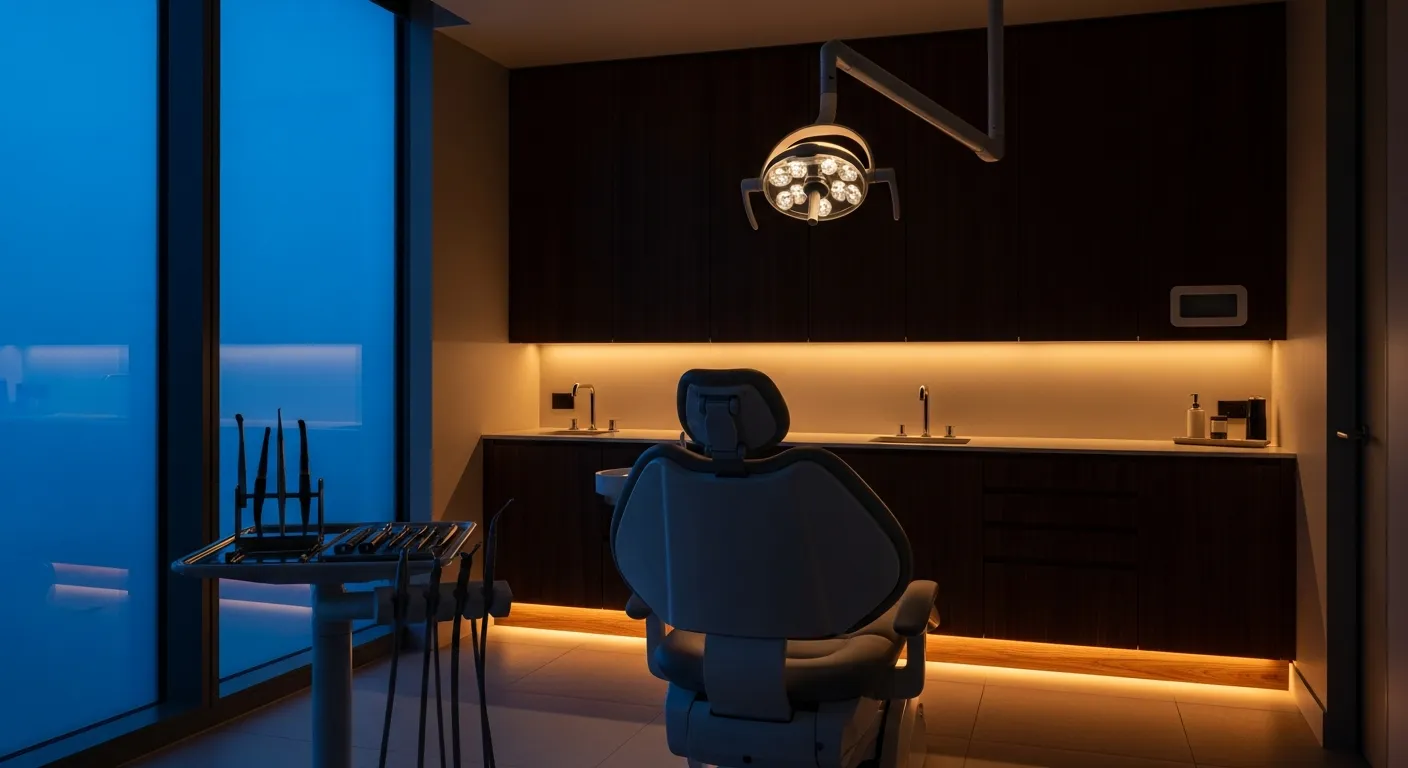
The Clinic That Never Misses a Booking
Evadenta — a busy dental clinic — was losing evening and weekend patients. We deployed AI-powered patient messaging. Here’s what changed.
The Problem: Patients That Slipped Away
Evadenta is a well-established dental clinic with a full schedule and a steady stream of patients. During business hours, the team is focused on care — cleaning teeth, fitting crowns, managing emergencies. The front desk handles a constant flow of phone calls, walk-ins, and paperwork. When a patient sends a message through the website asking about availability, it often sits unanswered for hours. Staff took an average of 3.7 hours to respond to incoming messages.
The real gap showed up outside working hours. Evenings, weekends, and holidays — when the clinic was closed and no one was monitoring messages — patients looking to book or reschedule had no way to get a response. They would visit the website, find no immediate way to interact, and move on. Some booked with a competitor that responded faster. Others simply forgot to follow up the next day. Every unanswered inquiry was a potential appointment that never materialized.
The clinic knew they were losing patients, but there was no practical way to staff a front desk around the clock for a practice of their size. They needed a solution that could hold a real conversation with patients — not just display a static booking form — and do it at any hour without adding headcount.
The Solution: Conversations, Not Forms
We deployed an AI-powered conversational messaging system directly on the clinic’s website. Five years of building enterprise data infrastructure taught me one thing — production systems need engineering discipline regardless of domain. Instead of a static contact form or a simple chatbot with canned responses, patients interact with a system that understands natural language. They can ask about availability, book an appointment, reschedule, or cancel — all through a normal conversation. The system responds in under 30 seconds, compared to the previous 3.7-hour average when staff handled messages manually.
The assistant is available 24/7 — evenings, weekends, and holidays included. It syncs with the clinic’s records to provide accurate, up-to-date information. Every interaction is fully GDPR-compliant, with 4 out of 5 patients consenting to AI interaction. The system handles the entire conversation flow autonomously, only escalating to human staff when a situation genuinely requires it.
From 56 conversations in month one to 111 by month four — adoption doubled without changing the AI.
Adoption grew from 56 patient conversations in month one to 111 by month four — doubling without any changes to the AI itself. Returning patients and new visitors found it a faster, more convenient way to interact with the clinic.
Measurable Outcomes
Related Reading
What Clinics Don't Tell You About AI Implementation
Three things we learned deploying an AI receptionist in a live dental clinic — and what they mean for any business considering automation.
Read more →Automation ROI: What the Real Numbers Look Like
Forget the 10x claims — here is what automation ROI actually looks like after six months of real-world deployment.
Read more →The Business Automation Mistake We Made Four Times
We built four versions of a business automation pipeline in 11 weeks. Each worked — and each was broken in a way we could not see. The fix was not better code.
Read more →Built This for a Clinic. Ready for Yours.
Want to talk through what this looks like for your clinic?